

The barred M was necessary because the Romans didn’t use zero, and they didn’t like using more than three identical letters in a row. If you can’t go above three M’s in a row, you can’t get to https://dev-siam1135.pantheonsite.io/what-is-depreciation-and-how-do-you-calculate-it/ 4,000, which would be MMMM. In internet record keeping, for instance, CPM is the cost per thousand impressions of an internet ad.
Method 2 – Apply the TEXT Function to Format Numbers in Thousands K in Excel
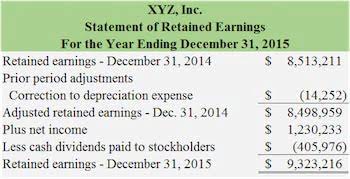
Yes, MM is recognized globally in the world of finance and accounting to represent one million. However, it’s important to note that it may be less known in areas where the use of Roman numerals is not common and in non-English speaking countries who may use other abbreviations. The term enables clarity and consistency, reducing the risk of misunderstandings due to different interpretations of number notation. Unfortunately, there isn’t a consistent approach to labeling units. The least ambiguous approach is to simply write them out in words, such as “$ thousands.” This is Corporate Finance Institute’s recommended method, to avoid any potential confusion.

What is M in dollars?
When two Ms are together (MM), it indicates 2,000 when using this methodology for expressing numbers. To avoid confusion, the term $1MM is often used to designate a million, while the generic “MM” represents 2,000. The most important thing to remember when using abbreviations on your resume is consistency. The best (and most common) way to abbreviate millions on a resume is “MM.” It’s clear and easy to understand, which is the key to successfully abbreviating numbers.
b. Different Conventions Based on Location
Led by editor-in-chief, Kimberly Zhang, our editorial staff works hard to make each piece of content is to the highest standards. Our rigorous editorial process includes editing for accuracy, recency, and clarity. In financial operations – where every zero in a number is crucial – abbreviating large figures helps reduce potential errors when handling complex calculations and transactions. Therefore, understanding and using this term is crucial in the field of finance.
- A unit of abbreviation, the Roman numeral, MM, is frequently used to represent a million.
- Writers should avoid using “M” in technical texts or research articles and stick to the proper abbreviation prescribed by the authorized body, where necessary.
- Stating at the top of the report that “all figures are in millions of dollars” should take care of it.
- In this example, we intentionally chose a piece of analysis that contained various different units, such as what does mm mean dollars and shares.
This underscores the importance of context and clarity in financial documentation. When preparing reports for an international audience, it is advisable to specify the notation used to avoid any potential misunderstandings. The term MM is used in the finance world to denote one million and is a standard nomenclature used across the globe. It is commonly used in financial documents, contracts, and communication, especially those regarding large monetary amounts. Generally, the abbreviation with two M’s is preferred in finance. One thing to consider is that when writing about large amounts of money, the words “million” or “billion” are often left out altogether, as are superfluous zeroes.
- From myrias we get the English word myriad meaning “an extremely large number or amount”.
- And during the middle ages, monks practiced compressing text in manuscripts to save time, effort, and resources.
- Long term liabilities are another category of liabilities and generally refer to formal borrowing arrangements where the terms of repayment extend beyond more than one year.
- It makes the most sense considering that “million” starts with the letter “M.” Most abbreviations follow this standard practice.
- This period saw the rise of double-entry bookkeeping, a system that revolutionized accounting by providing a clear and systematic method for recording financial transactions.
- If, say, you use it for both units and dollars in the same document, separate the different categories so your readers don’t get confused.
It has its roots in the British Imperial System using Roman numerals and can also be referred to as USCS . Just one sample of anecdotal evidence, market analysis reports from Frost and Sullivan use Mn for million and B for billion. Also, a financial news context is very different from a financial document context; reporting & news are pretty much by-definition for a broader audience than the materials & topics they cover. M for thousands and MM for millions would only ever be used in a context where the audience is proficient with financial jargon.
- We don’t know for sure why the Romans used letters or why they chose the letters they did.
- That letter isn’t Greek or Roman, but the average reader would likely understand the concept.
- We are more likely to see a headline that reads the government spent $60B on a new project.
- You might come across “mm” in scientific or engineering fields, where different values are required, and they can reach well into the millions as a unit.

The Latin mm or m for millions numeral MM is frequently used to designate that the units used in presenting information (financial and non-financial) are in millions. The example below shows how figures can be portrayed in millions. I know I have seen jobs posted that pay $50K, and K is meant to stand in for a thousand.
I don’t know how the abbreviations would work in French or Dutch, two languages which were dominant in finance for centuries. These abbreviations simplify the reading and comprehension of financial documents. If you have to spend real estate cash flow time counting how many zeroes are after a number to understand the full amount, it’ll take extra time to understand what is being communicated to you by an accountant.
MM in International Reporting

The cash lump sum is the money immediately available, generated from the sale of Mega Millions tickets. The annuity option invests the cash lump sum in government bonds over 29 years, so it gains interest over time. Use our annuity payment schedule tool to view an estimate of these annual payments.